How can parents educate their children at home?
How can you stop children learning at home? You can't!
The foundation stage, is about children learning all the time - it is about young children learning how to make friends, become independent, recognise letters and numbers. It happens all the time, without you realising it.
Children are like sponges, they are absorbing things all the time, learning from their experiences, whether that is your intention or not.
Pre-schools, Nurseries and Accredited Childminders plan specific activities to show that the children are learning. They provide evidence to enable them to claim Early Years Education Funding - but without this evidence, and whether at home, with a childminder or with a nanny the children are still learning, let me give you some examples:
Learning to Read
Children learn to read by seeing words and letters around them - their first word might be 'Tesco' and they see a lorry drive past, or their first letter may be 'M' as they recognise the golden letter of McDonalds.
You can help by pointing out words - road signs, introduce them to books, letting them hold the shopping list and cross things out as you put them in the trolley, let them see you reading, and writing and most importantly value and praise their efforts as they show something to you. Learning to Count
When my two year old counted to 7, I was amazed - then I realised he didn't know the numbers, he just could count them - 1,2,3,4,5,6,7 - how did he do this? Then it dawned, everytime I made a bottle of baby milk I counted 7 scoops into the bottle - and he was copying me.
Numbers are all around us, we can count apples into a bag at the supermarket, the steps to the bedroom at night, we can point out numbers on houses, the telephone, the clock. It is about getting children familiar to numbers, noticing what is a number and what isn't.
A great idea is to share out snacks - how many grapes would you like... would you like more... they soon learn bigger numbers (especially if you are counting chocolate buttons) and they learn how to count and share fairly, or to play games together. Drawing and writing
Holding a pencil and making marks is important - but it is more important that your child learns to control his or her body first - provide opportunities to play, build, thread, do puzzles, ride bikes, trikes, kick a football, play catch. Technology
Children learn about technology and how it works every time you:
use the toaster,
boil the kettle,
hover,
drive the car,
use the computer,
use the remote control on the television,
use the video,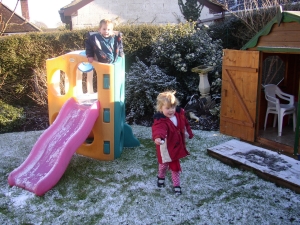
make a phone call,
ring the doorbell,
the list is endless.
How many bits of technology have you used today? Their environment
Children are learning about where they live, familiar adults, the climate, the world they live in every time you go out, whether to the shops, the library, the park, or just round the corner. They are becoming familiar with the world they live in, that is important to them and learning about it through their own experiences.
They can learn about the weather - by giving them time and the opportunity to play in the sunshine, the rain or the snow (although we didn't have much!).
If you are staying at home today - they are still learning about their home environment and their family. Playing with friends
Just by giving your child the opportunity to play with other children, you are helping them to learn about sharing, to build friendships and to learn from their peers - this could be at a Parent and Toddler group, at swimming lessons, at having a coffee with a friend, helping them mix with others in preparation for school. The Uniqueness you offer.
Whether you are aware or not you provide a vital role, you are a consistent, dependable person who is always there, who can help solve problems, provide new experiences, give emotional stability and love and you can probably give your child all the one to one time he or she needs.
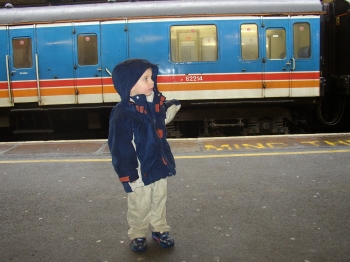 You can help them learn by developing their interests, if they like trains - you can take them to the station, buy a new train at the shop, watch their favourite video with them, build a track together, find stories and facts about trains at your library and stretch your child's interest as much as he is ready for, yet if it rains you can stop everything and go look for rainbows. You can help them learn by developing their interests, if they like trains - you can take them to the station, buy a new train at the shop, watch their favourite video with them, build a track together, find stories and facts about trains at your library and stretch your child's interest as much as he is ready for, yet if it rains you can stop everything and go look for rainbows.
Do you want to know more?
Visit http://www.underfives.co.uk an early years education website full of information, activities and links.
Helen Renouf
|






 42%
42%
